Ongoing
2019 - Present
Health Tracking Methods Using Passive Mobile Sensing
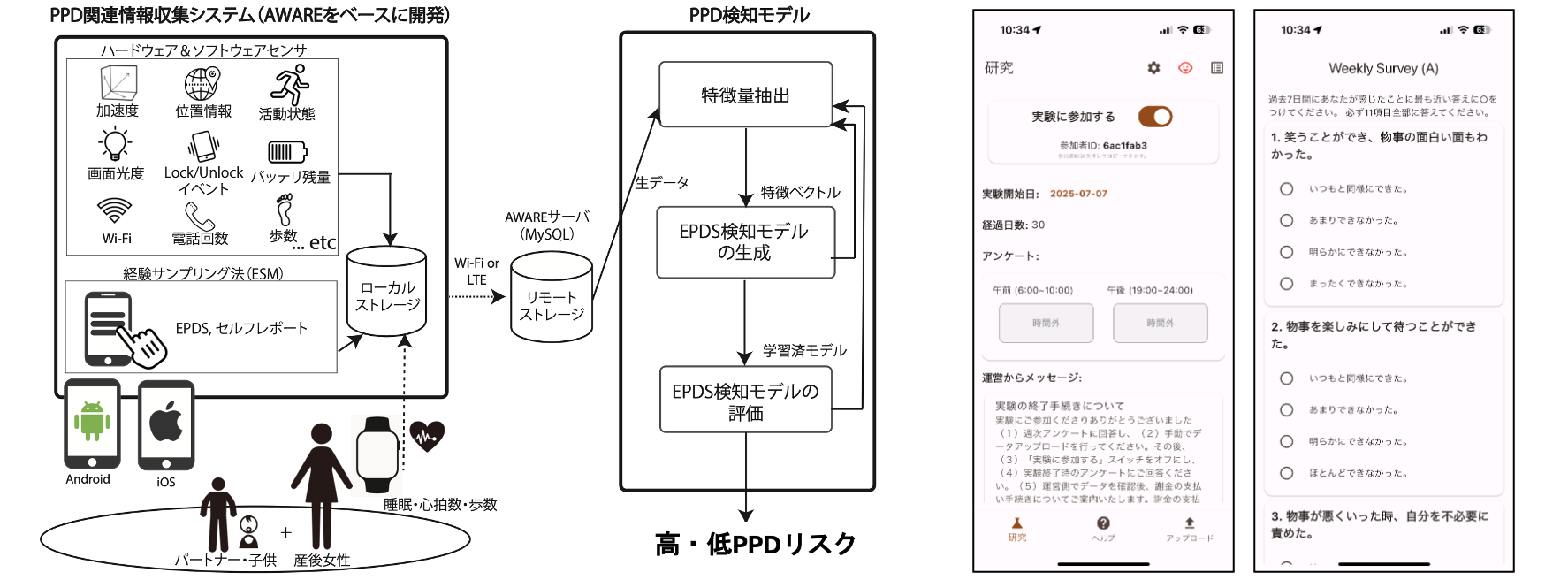
Application of passive mobile and wearable sensing technologies to health tracking, including early detection of postpartum depression, disease treatment monitoring, symptom tracking, and medication support in collaboration with medical institutions.
Mental Health
mHealth
Wearable
Disease Tracking
Mobile Sensing
Overview
Traditional health screening methods such as self-reported questionnaires face limitations in capturing objective, continuous behavioral changes. This project applies passive mobile and wearable sensing technologies to health tracking and disease management, including early detection of postpartum depression (PPD), Parkinson's disease monitoring, and substance use assessment, in collaboration with medical institutions.
Approach
- ZeroPPD (UbiComp 2025): An iOS application that continuously collects sensor-derived behavioral metrics (mobility, activity, phone usage) from postpartum women, combined with self-reported infant/maternal sleep data and EPDS scores, analyzed using Linear Mixed-effects Models
- Parkinson's disease monitoring (JMIR 2020): Smartphone accelerometer-based Tremor Intensity Parameter (TIP) for quantifying hand tremor severity and assessing medication effectiveness
- Substance use detection (Biosensors and Bioelectronics 2021, JMIR 2019): Mobile phone sensor-based detection of subjective cannabis intoxication and assessment of acute effects on cognitive functioning in natural environments
Results
- PPD detection: Identified PPD-specific digital biomarkers including infant-related sleep disruptions, altered daytime activity patterns, and stress-related mobility changes significantly correlated with EPDS scores
- Parkinson's monitoring: TIP showed significant correlation with self-assessed UPDRS tremor scores, and identified significant differences in accelerometer signals before and after medication intake
- Substance use: Higher subjective marijuana "high" ratings were associated with slower reaction times and fewer correct responses across cognitive tasks
Significance
This research demonstrates that passive mobile sensing can provide an effective pathway for continuous, objective monitoring of health-related behavioral changes. By identifying digital biomarkers from everyday smartphone usage, these methods pave the way for data-driven early risk identification and timely clinical interventions without imposing additional burden on patients.